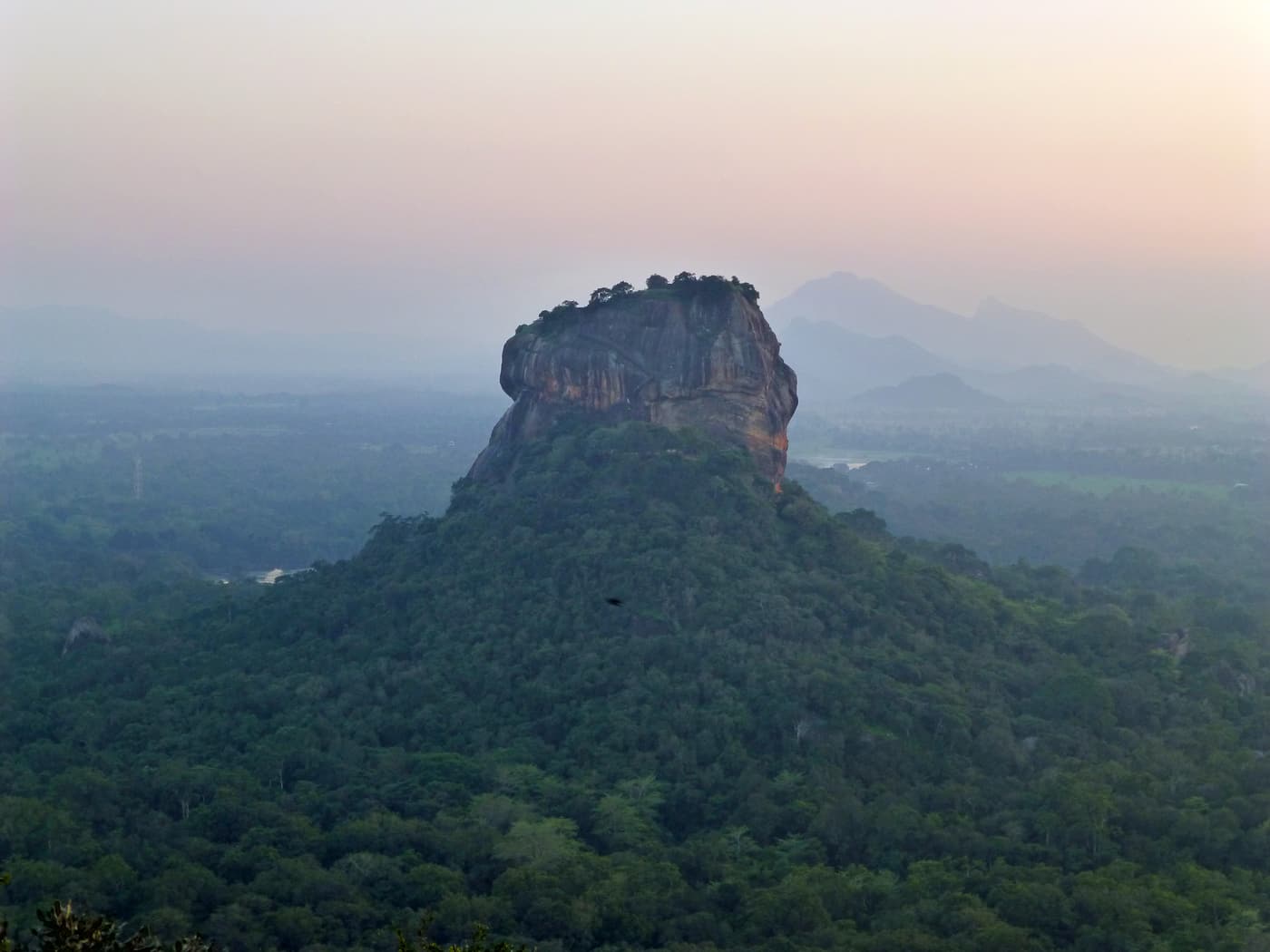
Sigiriya — Sinhagiri, the "Lion Rock" — is a flat-topped column of rock that rises roughly 180–200 metres out of the forest of central Sri Lanka. According to the island’s chronicles, King Kashyapa I (reigned about 477–495 CE) seized the throne from his father Dhatusena, moved the capital here from Anuradhapura and built a palace on the summit, with a city and gardens at its foot. When his half-brother Moggallana returned with an army in 495, Kashyapa was defeated and took his own life. The rock was handed to Buddhist monks and remained a monastery for centuries before the forest closed over it.
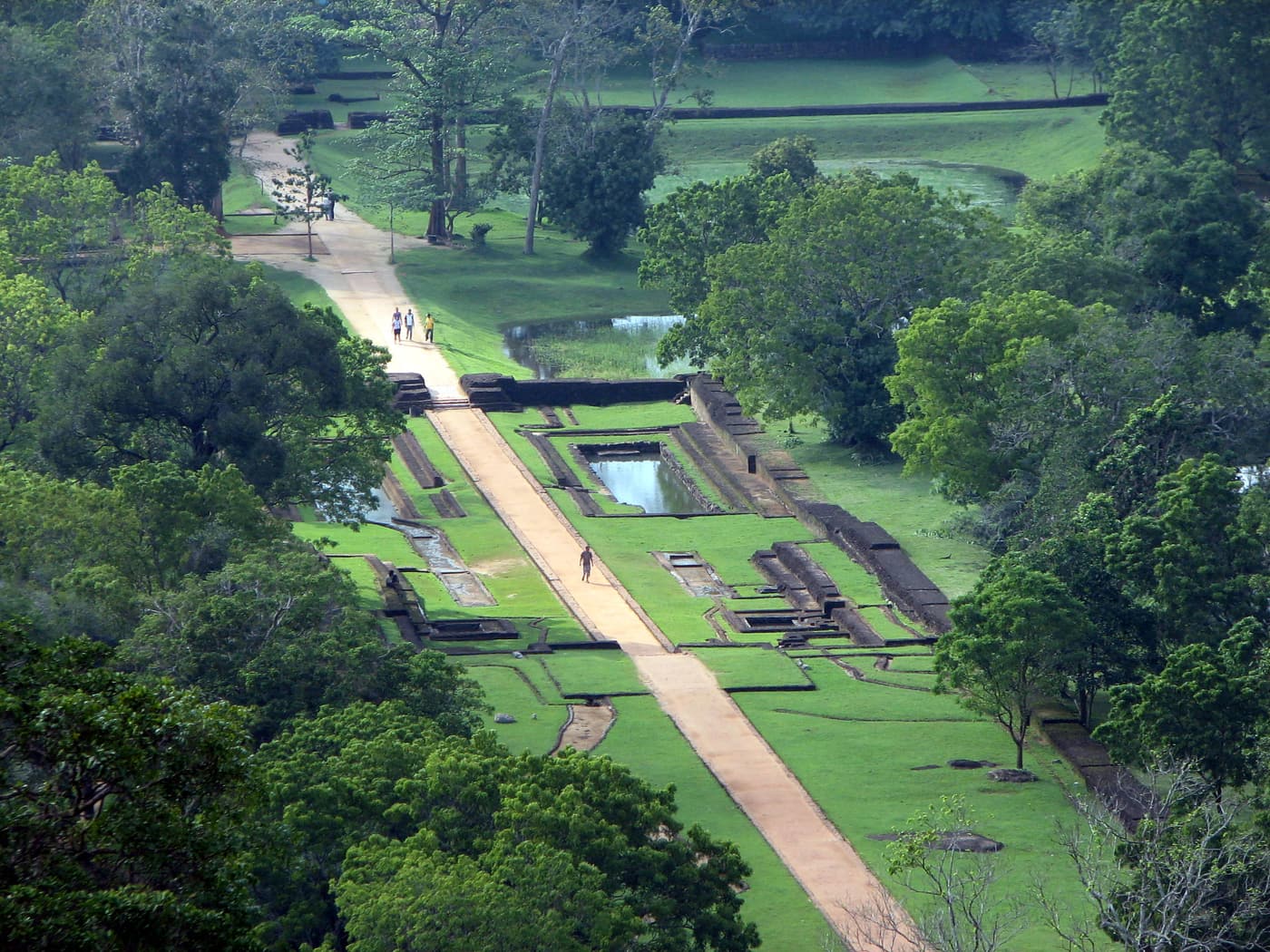
UNESCO listed the "Ancient City of Sigiriya" as a World Heritage Site in 1982. What you climb through today is the whole royal scheme in sequence: the gardens, a sheltered gallery of frescoes, the polished Mirror Wall, the Lion’s Paws terrace and finally the ruins of the palace itself. Allow two to three hours, and read our step-by-step guide to the climb before you go.
Top things to do at Sigiriya Rock Fortress
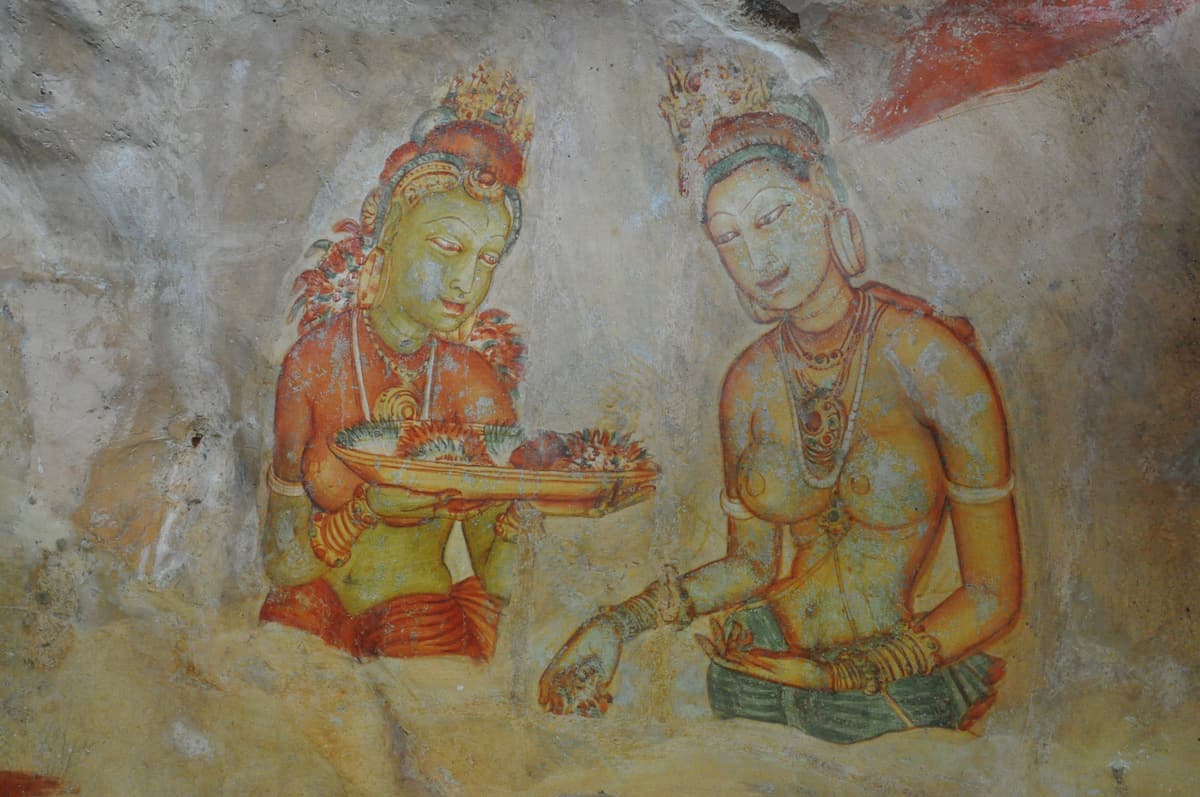
See the frescoes — the "Sigiriya Damsels"
A spiral staircase leads up to a sheltered pocket in the western face where around twenty female figures survive, painted in the fifth century in glowing reds, yellows and greens. Whether they are celestial nymphs or ladies of Kashyapa’s court is still debated. Graffiti on the wall below suggests there were once many more. Photography of the frescoes is not allowed, and staff enforce it.
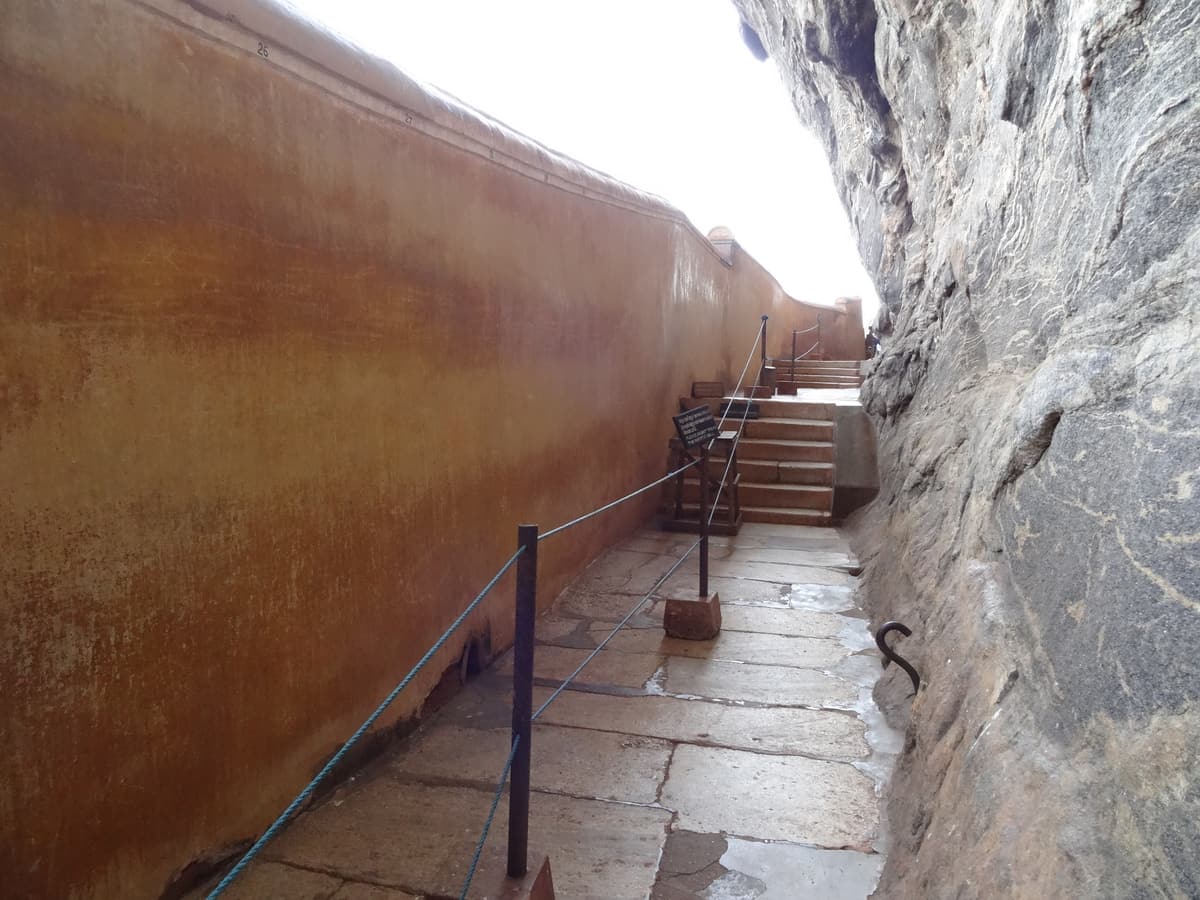
Read the Mirror Wall
Below the frescoes the path runs behind a wall of plaster once polished so highly that the king could, it is said, see his reflection. Visitors between roughly the 7th and 13th centuries scratched verses into it — admiration for the painted women, mostly. Several hundred of these poems have been deciphered, making the wall one of the oldest collections of Sinhala writing. Touching or writing on it is forbidden.
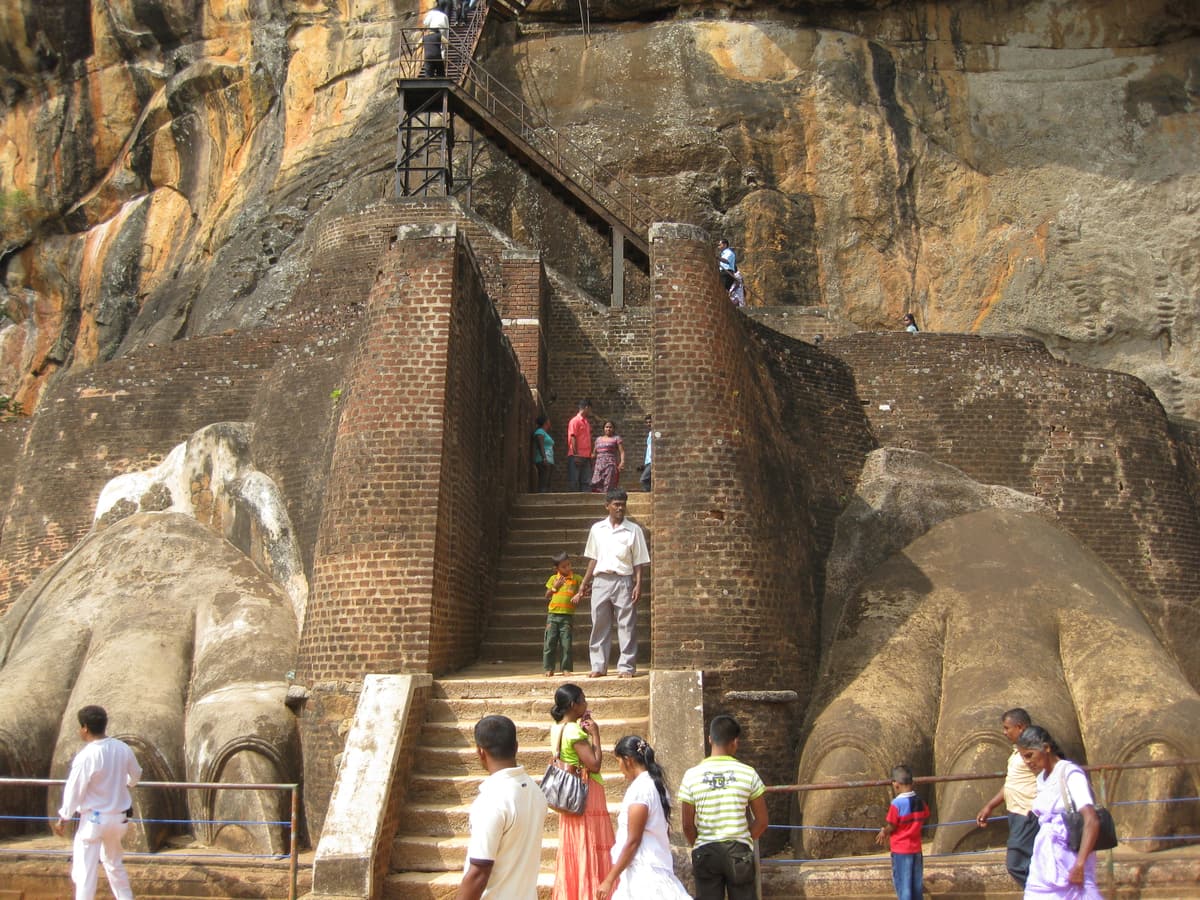
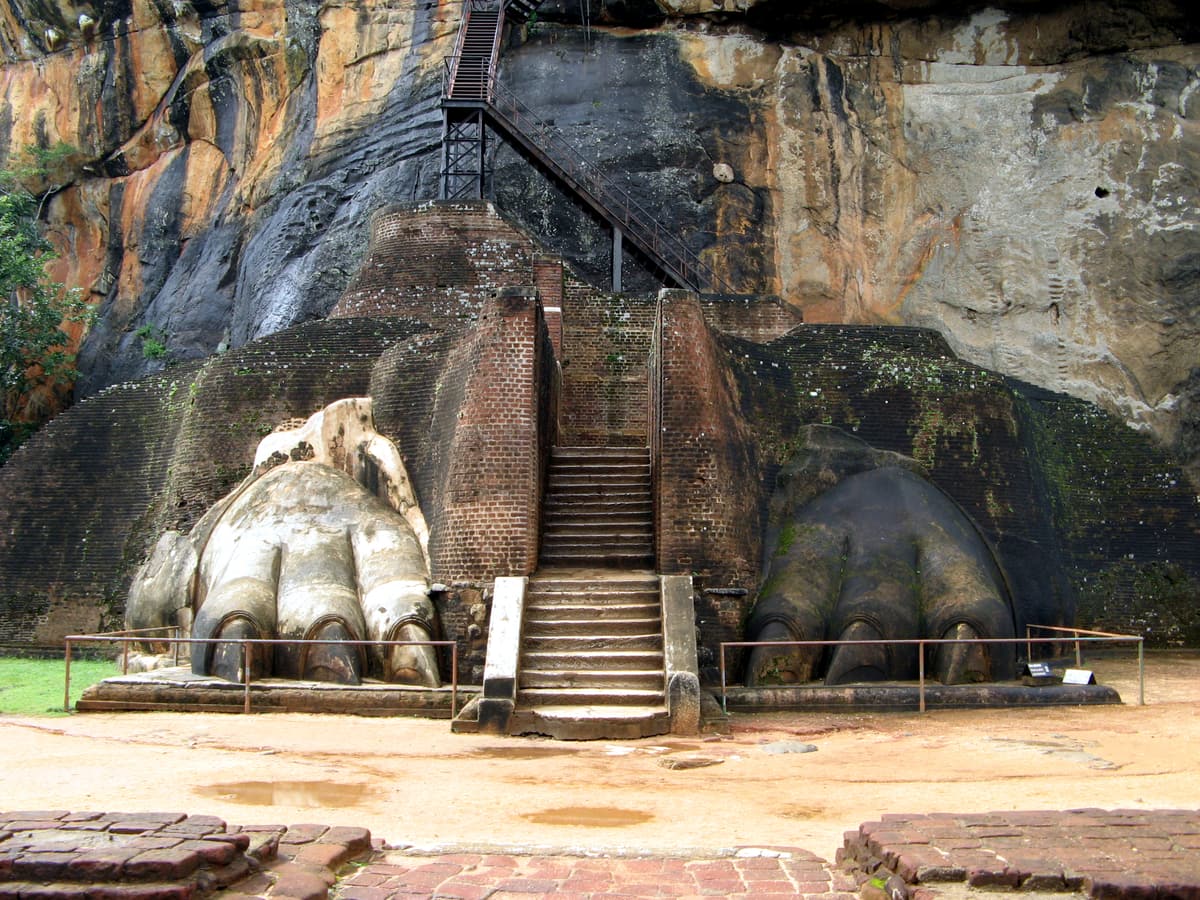
Stand between the Lion’s Paws
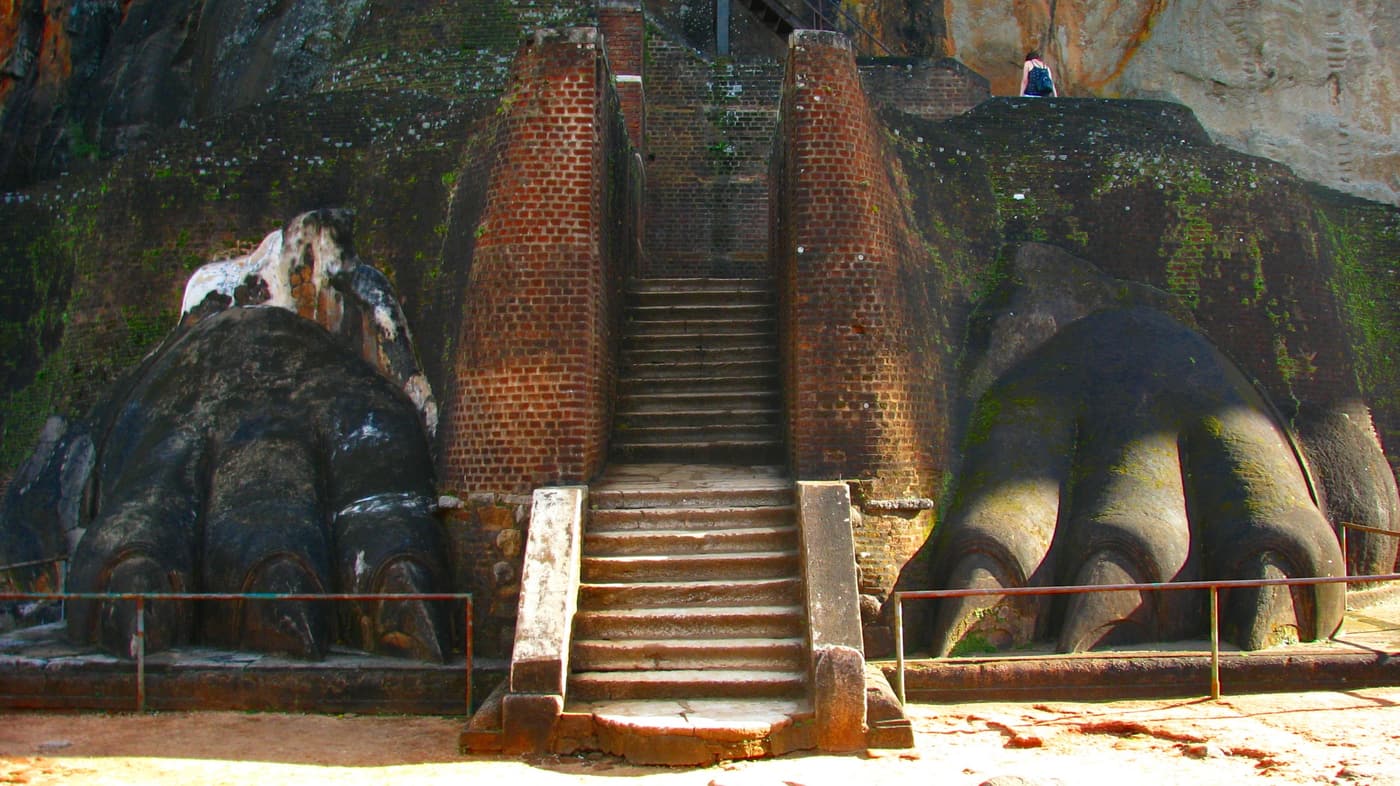
On the northern terrace, two colossal paws carved in brick and plaster flank the final staircase. They were uncovered by the archaeologist H. C. P. Bell in 1898 and are all that remains of a gigantic crouching lion whose open mouth once formed the gateway to the palace — the origin of the name Sigiriya. This terrace is the natural place to rest and decide whether to tackle the last, most exposed flights.
Explore the summit palace
The top covers about 1.6 hectares and is terraced from end to end: brick foundations of the palace on the higher western side, a large rock-cut pool, a stone throne and gardens stepping down to the east. The 360-degree view takes in the water gardens directly below, Pidurangala to the north and forest to every horizon.
Don’t rush the way down
The descent takes a different route past the Cobra Hood Cave, the Audience Hall rock and the boulder gardens — covered in our gardens guide — and ends at the car park by the southern exit, where the stalls and tuk-tuks wait.
How to get to Sigiriya Rock Fortress
- From Sigiriya village: the ticket office and western entrance are 1–2 km from most guesthouses — a short tuk-tuk ride, or a walk in daylight. Avoid walking the forest roads after dark, when wild elephants move about.
- From Dambulla: about 17 km, roughly 30 minutes by tuk-tuk or car. Local buses to Sigiriya leave the Dambulla bus stand about every half-hour during the day and take around 40–45 minutes.
- From Habarana: about 15 km, 20–25 minutes by road; Habarana also has the nearest railway station.
- From Colombo, the airport or Kandy: see our getting here guide, or let a day trip take care of the transport.
Insider tips
- Be at the gate at opening time or arrive after about 3 pm. The middle of the day is hot, glaring and crowded, and the queues on the staircases are longest.
- Foreign adults pay around US$35 (charged in rupees; cards are usually accepted). Holders of passports from SAARC countries pay a reduced rate on showing the passport. Check current prices before you go.
- Heed the hornet warning signs near the Lion’s Paws: keep your voice down on the upper staircases. If the wasps are active, staff may close the summit for a while.
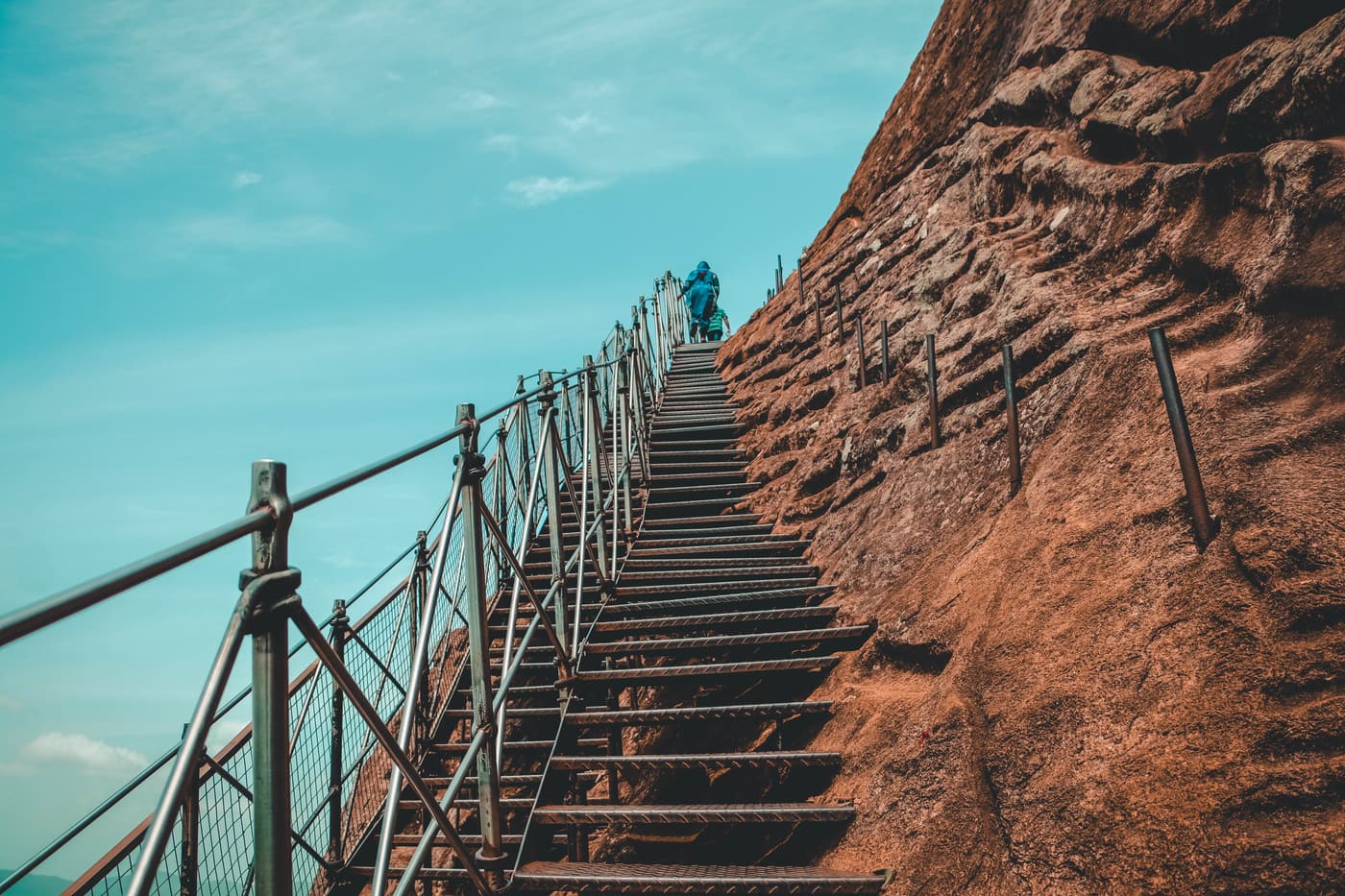
- The stairs on the final section are steel, steep and open-sided. They are safe, with handrails throughout, but people with a strong fear of heights often choose to stop at the Lion’s Paws.
- Carry at least a litre of water per person, a hat and sunscreen. There is nothing to buy once you are past the gardens.
Best tours & tickets for Sigiriya Rock Fortress
These top-rated experiences are the easiest way to see Sigiriya Rock Fortress:
 Private guided walk from US$29
 Sigiriya: Rock Fortress Private Guided Walking Tour
The tour that makes the rock itself the subject. A local guide walks you through the water and boulder gardens, up past the frescoes and the Mirror Wall, between the Lion’s Paws and onto the summit, telling King Kashyapa’s story as you climb. Entrance tickets are normally paid separately — check the listing.
- A private guide from the water gardens to the summit
- The frescoes, Mirror Wall and Lion’s Paws explained
- Go at your own pace, with rest stops when you need them
 Day tour from US$36
 Sigiriya Lion Rock Hike & Minneriya National Park Safari
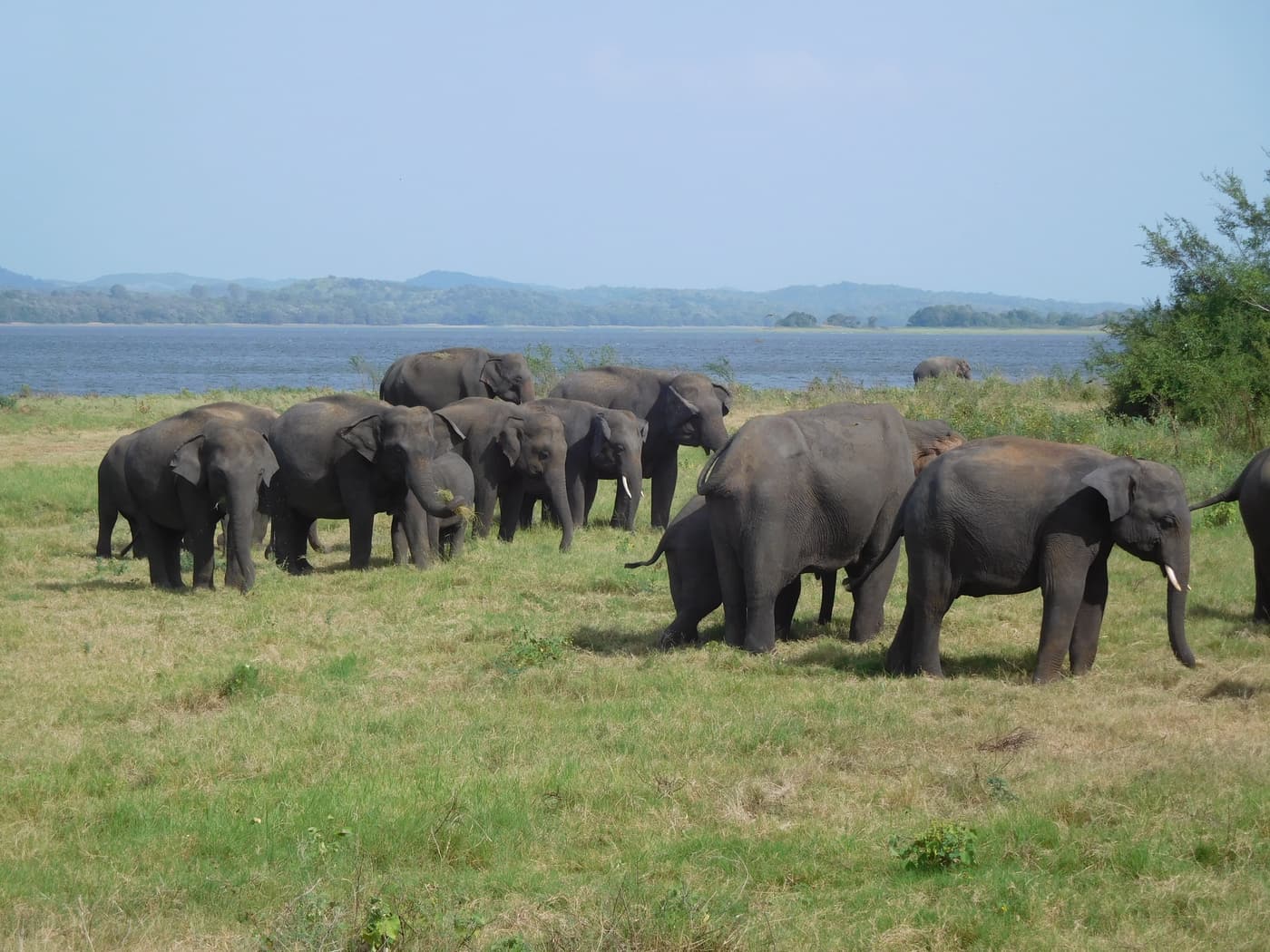
The two headline experiences of the area in the right order: the rock early, before the heat, and the elephants late, when they come out onto the open grass. Good if you have a single full day in Sigiriya and do not want to organise two separate trips.
- Climb Sigiriya in the cool of the morning
- Afternoon jeep safari to see wild elephants
- One booking, transport between the two sorted
 Entry ticket from US$69
 Sigiriya: Lion Rock Fortress Entry eTicket
A pre-booked entry ticket for the rock fortress. Be aware that it costs noticeably more than paying at the official counter, where the foreign adult price is around US$35 — you are paying for convenience and for having it arranged in advance. Read the listing carefully for exactly what is included.
- Your entry arranged before you arrive
- Useful when you want everything booked in advance
- Visit at your own pace