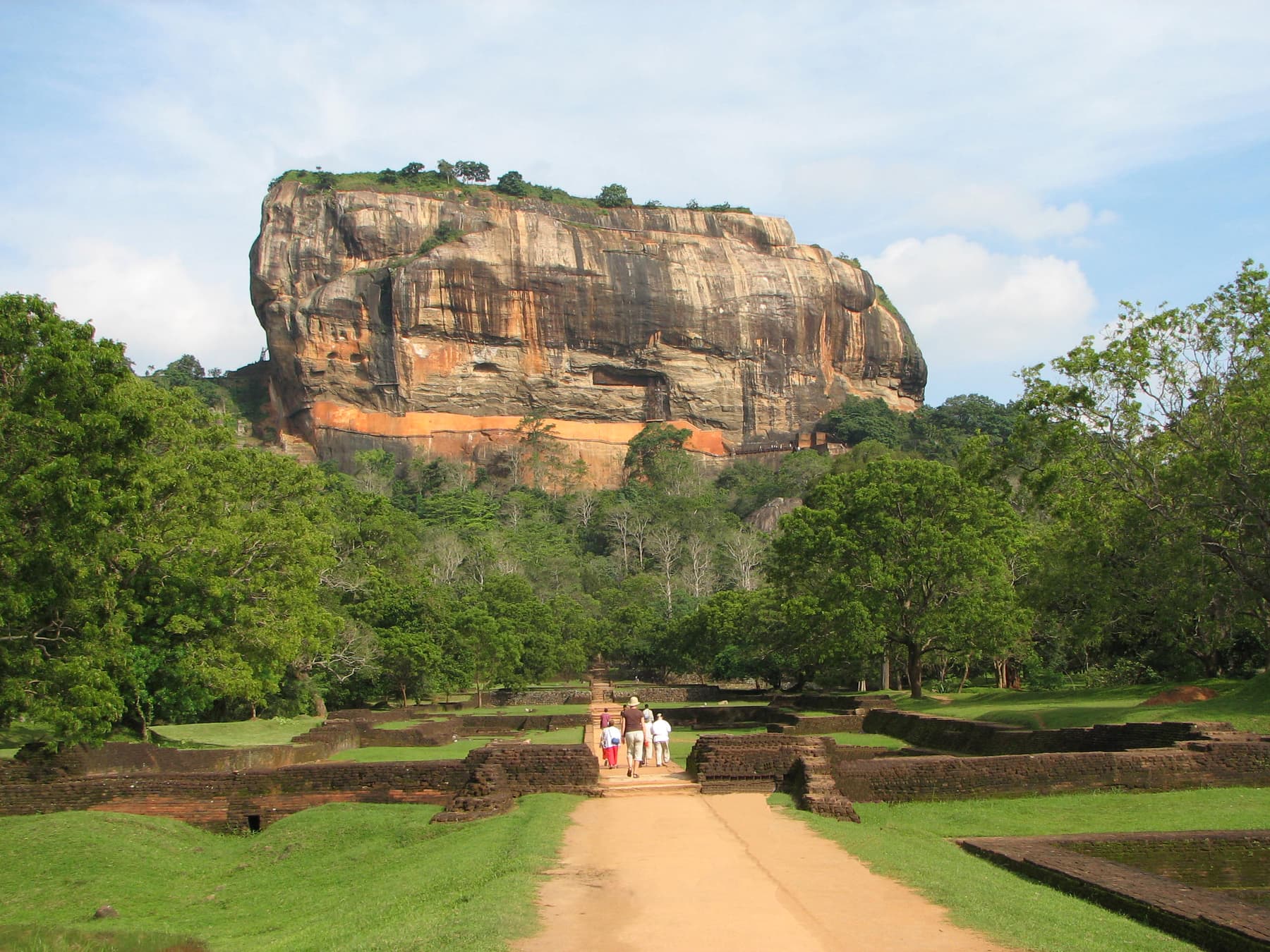
Climbing Sigiriya is less a hike than a long staircase through an archaeological site. From the western gate you cross the water gardens, wind up through boulders and brick terraces, take a spiral stair to the frescoes, pass behind the Mirror Wall, come out on the Lion’s Paws terrace and then climb a steel stairway bolted to the rock to reach the palace on top. The path is one-way, so you come down by a different route.
Most people take 1.5 to 3 hours for the round trip. It demands patience more than fitness — but heat, crowds and the exposed final section catch out visitors who arrive unprepared at eleven in the morning.
Key facts
| At a glance | What to expect |
|---|---|
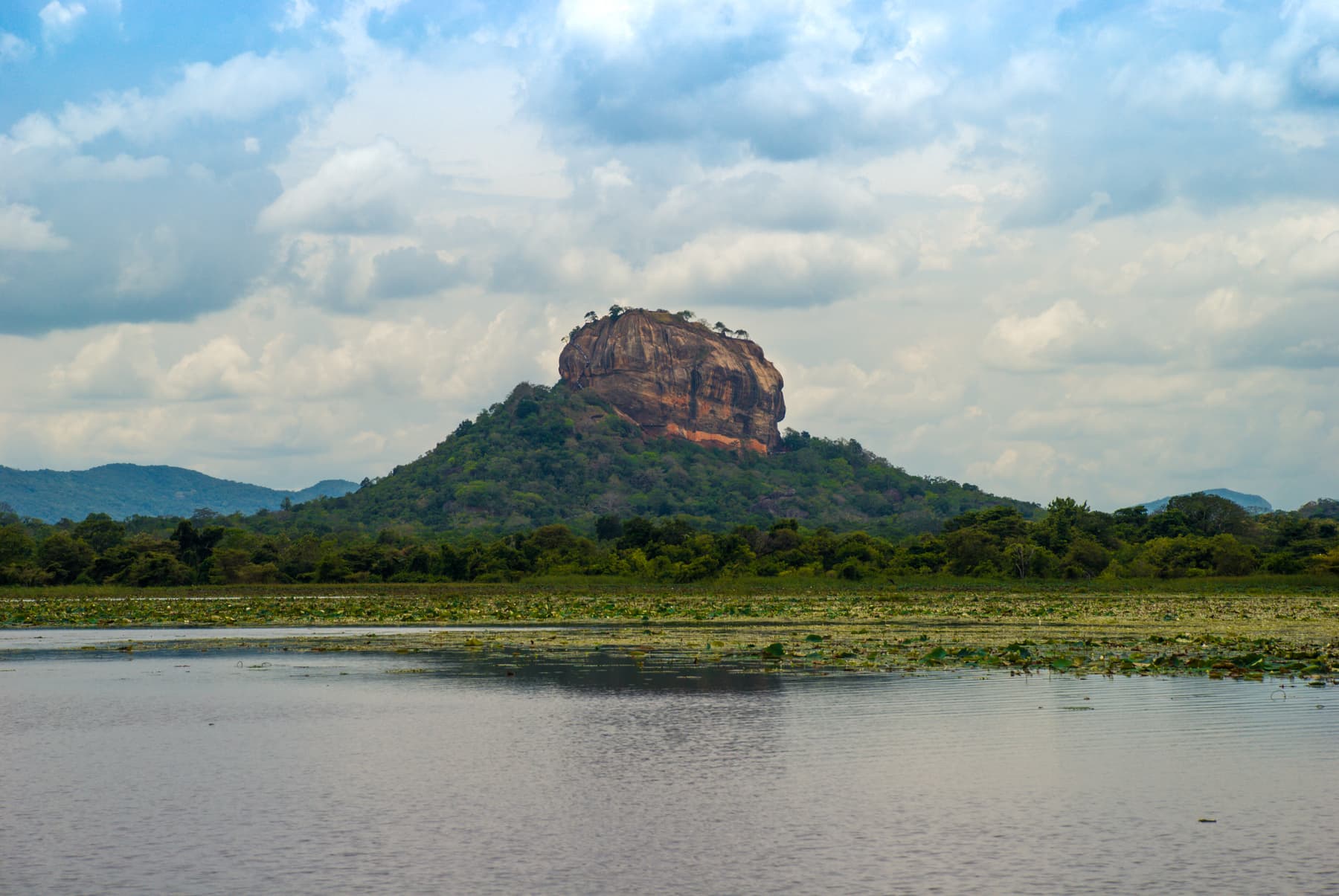
| Height | The rock rises roughly 180–200 m above the plain |
| Steps | Around 1,200 in total, in several flights |
| Time needed | 1.5–3 hours; half a day with the museum and gardens |
| Opening hours | Daily, from early morning until about 5 pm for last entry — check locally |
| Ticket (foreign adult) | Around US$35, paid at the counter in rupees or by card |
| Best time to start | At opening, or after about 3 pm |
| Difficulty | Moderate: steep stairs, heat, some exposure |
Tickets and opening hours
Tickets are sold at the official counter beside the Sigiriya Museum, near the western entrance, and are managed by Sri Lanka’s Central Cultural Fund. The price for foreign adults has been around US$35 for some years, with a reduced rate for children; visitors holding passports of SAARC countries (India, Pakistan, Bangladesh, Nepal, Bhutan, the Maldives and Afghanistan) pay roughly half on showing the passport. The amount is charged in Sri Lankan rupees, and cards are normally accepted. The ticket covers the gardens, the rock and the museum.
The site is open every day. The ticket office has generally opened between about 5 am and 7 am and closed around 5 pm, with visitors expected off the rock by dusk. Exact hours and prices change from time to time — ask your hotel the evening before, especially if you plan to be first through the gate.
The route, stage by stage
1. Water gardens (flat, 10–15 minutes)
From the gate a straight avenue leads between pools and fountains towards the rock. It is level and unshaded. In the morning, walk straight through and come back to the gardens afterwards.
2. Boulder and terrace gardens (first stairs, 10–15 minutes)
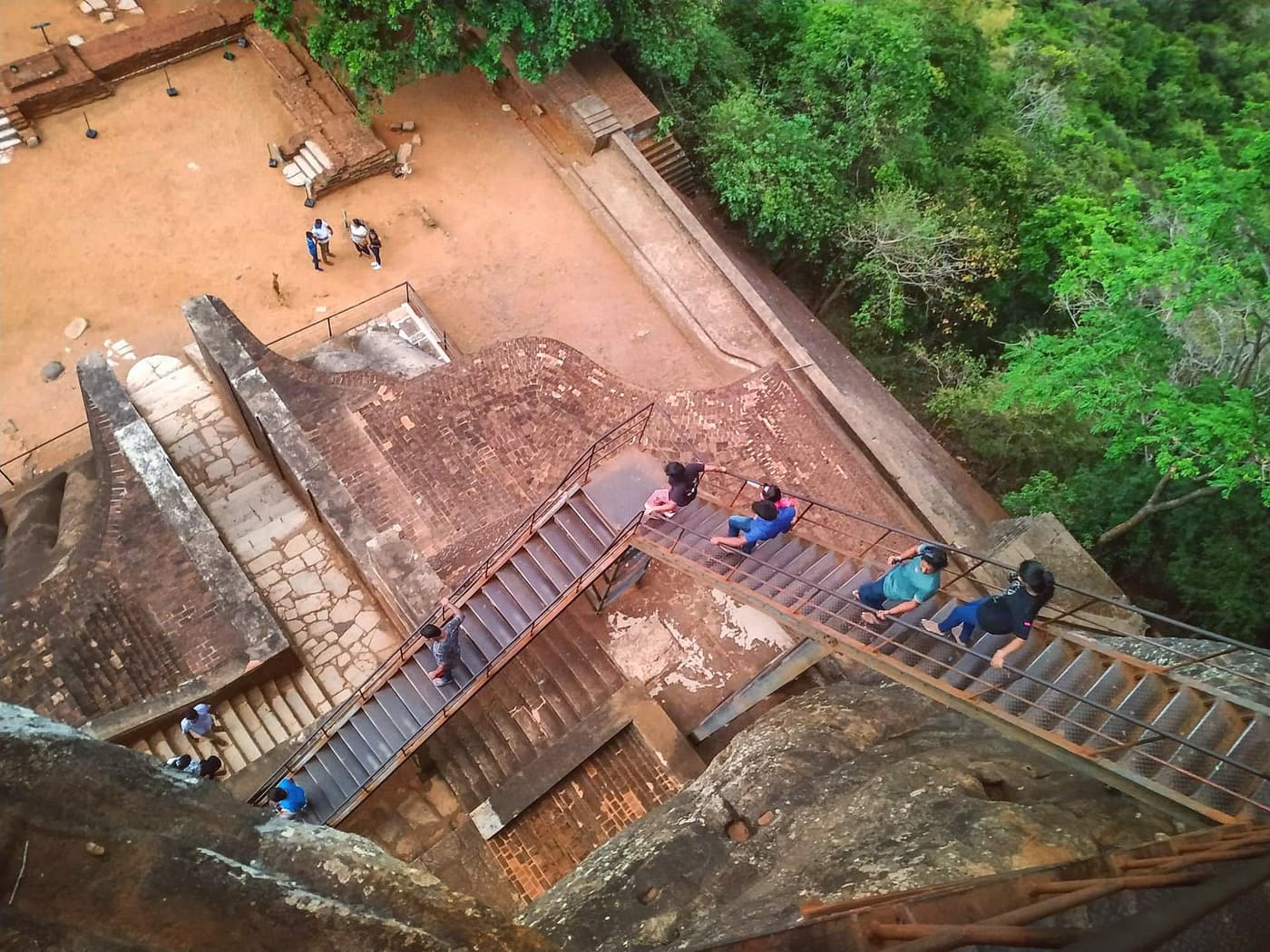
The path passes under a natural arch formed by two leaning boulders and begins to climb in flights of brick and stone steps across the terraced gardens. There is shade here and several places to stop.
3. The frescoes (spiral staircase)
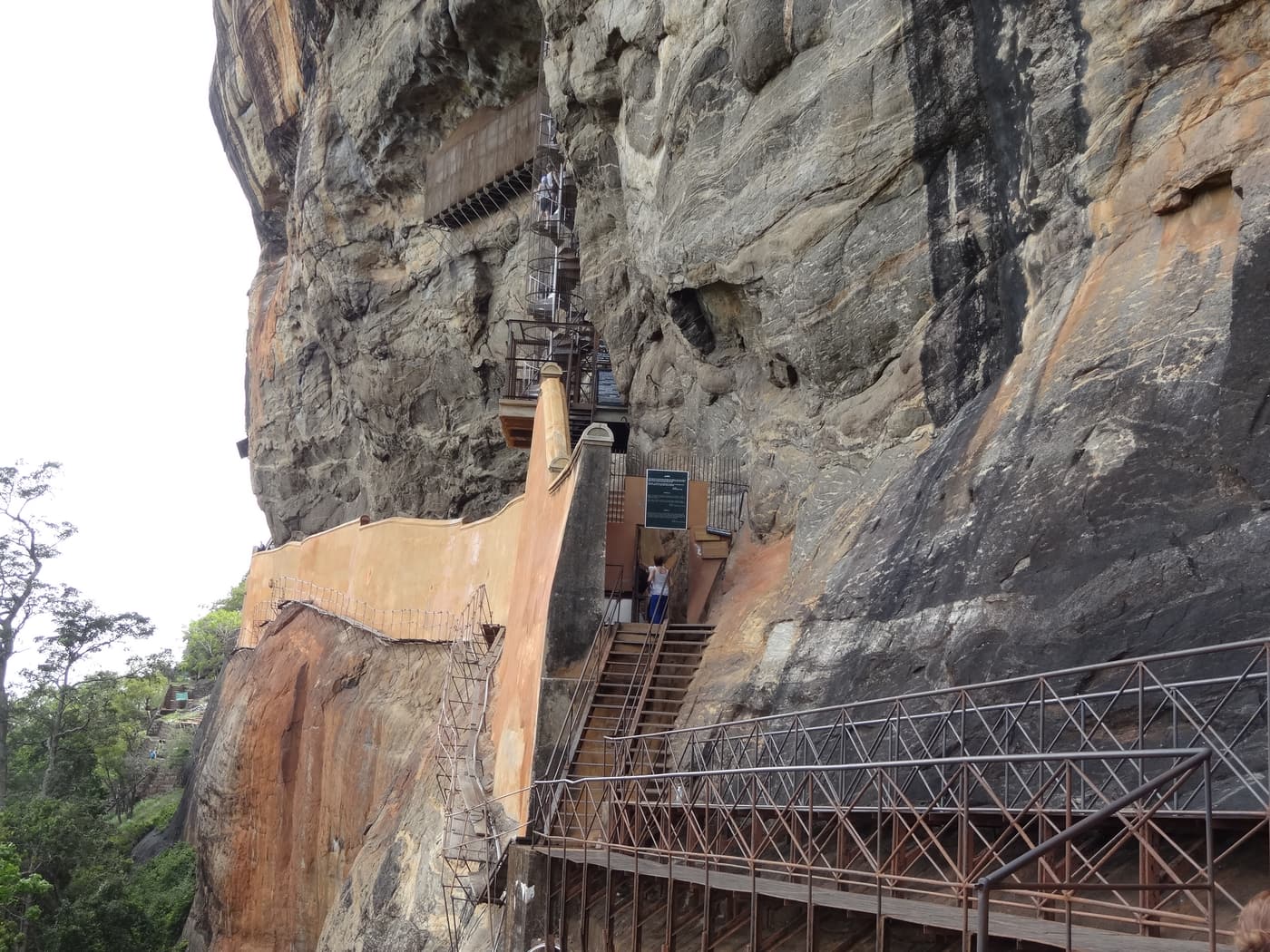
Halfway up the western face a caged metal spiral staircase climbs to a sheltered pocket of the cliff where the famous painted women — the "Sigiriya Damsels" — survive. A second spiral brings you back down. The stair is enclosed and safe but can feel airy. No photography is allowed in the fresco gallery.
4. The Mirror Wall
A level walkway runs along the cliff behind a tall plastered parapet, once polished to a shine and covered in the verses of early visitors. Do not touch it.
5. The Lion’s Paws terrace (rest stop)
More stairs bring you out on a broad platform on the north side, with trees, benches and the two great paws. This is roughly two-thirds of the way in effort. There is a first-aid post here, and this is where the hornet warnings apply.
6. The final ascent (steepest, most exposed)
Between the paws a brick stair leads to a steel stairway and walkway fixed to the bare rock. It is narrow, single-file in places and open to the view, with firm handrails on both sides. It takes ten to fifteen minutes. Beside it you can see the shallow footholds cut for the original staircase.
7. The summit
The top is a stepped field of brick foundations, with a big rock-cut pool and views in every direction. There is almost no shade. Allow 20–40 minutes, then follow the signs down; the descent rejoins the lower route below the Mirror Wall and leads out past the Cobra Hood Cave to the southern car park.
Hornets: take the signs seriously
Large colonies of wild bees and hornets nest on the overhangs of the rock, and signs near the Lion’s Paws ask visitors to keep quiet. Attacks are uncommon, but they do happen — more often in the hot, dry months and when the nests are disturbed by noise — and now and then the summit is closed for a few hours as a precaution. Keep your voice down on the upper stairs, do not use strong perfume, and if insects swarm, move away calmly, cover your head and follow the wardens’ instructions; protective shelters and nets are kept on the terrace. If you are allergic to stings, carry your medication.
Vertigo and fitness
- Fear of heights: the spiral stairs to the frescoes and the last steel stairway are the two testing places. Both have solid railings. Looking at the rock rather than the drop helps; so does climbing when it is quiet. Many people with vertigo go as far as the Lion’s Paws and are well satisfied.
- Fitness: if you can climb the stairs of a tall building at a gentle pace, you can climb Sigiriya. Stop often and drink.
- Children: school-age children generally manage well; keep a firm hold of small ones on the upper stairs. Carriers work better than pushchairs, which are useless beyond the gardens.
- Knees and hearts: the descent is hard on the knees. Anyone with a heart or breathing condition should take medical advice, and avoid the midday heat.
- Helpers: unofficial "helpers" may offer to take your arm on the stairs and expect payment afterwards. A polite, firm "no, thank you" is enough if you do not want assistance.
What to wear and bring
- Shoes with grip. Trainers or walking sandals; the steel steps are slick when wet.
- Water. At least one litre per person. There is nowhere to buy any beyond the entrance area.
- Sun protection. Hat, sunglasses and sunscreen — the summit is fully exposed.
- Light, comfortable clothing. Sigiriya is an archaeological site, not a temple, so there is no strict dress code, but modest clothing is appreciated. You will need covered shoulders and knees if you go on to Pidurangala or the Dambulla caves.
- Passport if you intend to claim the SAARC rate, and rupees or a card for the ticket.
- A small bag only. Keep food sealed and out of sight — the monkeys are quick.
- In the rainy months, a light rain jacket. The climb stays open in rain but may be suspended in thunderstorms.
With a guide or without?
You cannot get lost, and guidebooks cover the basics. But the site has little explanation on the ground, and a knowledgeable guide points out the things most people miss — the ancient plumbing, the sockets of vanished buildings, the best-preserved graffiti. Official guides wait near the entrance (agree the fee first), or you can book a private guided walk ahead and have the guide meet you at the gate. For a different angle on the rock altogether, climb Pidurangala at sunrise.